
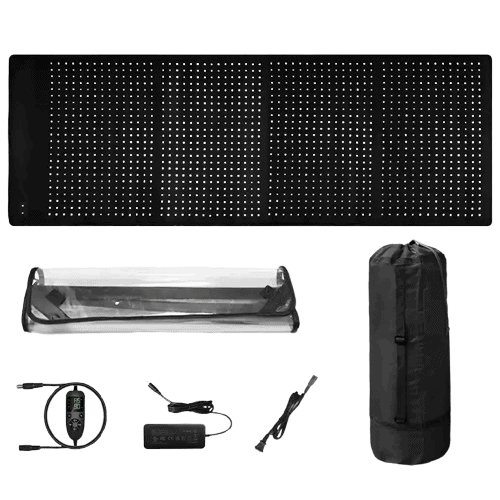
The Benefits of Using Red Light Therapy Products
Red light therapy has moved from experimental clinics into millions of homes, gyms, and medical practices worldwide. What began as a niche treatment for wound healing in space programs has evolved into one of the most versatile non-invasive therapies available—backed by over 7,000 published studies and hundreds of randomized controlled trials. The products delivering this therapy range from pocket-sized wands to full-body panels, each designed to harness specific wavelengths of red and near-infrared light to trigger measurable biological responses.
But what do these products actually do? Which benefits are supported by rigorous clinical evidence, and which remain speculative? This guide examines the scientifically validated benefits of red light therapy products across six primary domains: skin health, pain relief, muscle recovery, hair growth, sleep optimization, and cognitive support. The goal is not to sell you on hype, but to give you the evidence you need to use these products effectively.
How Does Red Light Therapy Work at the Cellular Level?
Before examining specific benefits, it helps to understand the mechanism. Red light therapy—also called photobiomodulation or low-level laser therapy—uses wavelengths between 600 and 1,100 nanometers to stimulate cellular function without generating damaging heat.
The primary target is cytochrome c oxidase, the fourth complex of the mitochondrial electron transport chain. This enzyme absorbs photons in the red and near-infrared spectrum, displacing inhibitory nitric oxide and restoring ATP production. The result is a cascade of downstream effects: improved cellular energy, reduced oxidative stress, enhanced blood flow through nitric oxide-mediated vasodilation, and modulation of inflammatory signaling pathways. These cellular changes are the foundation for every clinical benefit that follows.
Red light at 630–660 nm penetrates 1–2 millimeters, making it ideal for skin-level applications. Near-infrared light at 810–850 nm penetrates 3–5 centimeters, reaching muscle, joint, and nerve tissue. The best products combine both wavelengths to deliver full-spectrum benefits.
What Are the Skin Health and Anti-Aging Benefits?
Skin rejuvenation is the most commercially visible benefit of red light therapy—and also one of the most robustly validated. Dr. Rachel Reynolds, interim chair of the Department of Dermatology at Harvard-affiliated Beth Israel Deaconess Medical Center, initially dismissed red light therapy as “just the latest fad.” After reviewing the literature, she changed her position: “There’s legitimate medical literature supporting it.”
The mechanism is well-characterized. Red light at 630–660 nm stimulates fibroblast proliferation and induces dermal extracellular matrix remodeling. This leads to increased collagen density, enhanced elasticity, reduced wrinkle depth, and improved overall skin texture. Multiple clinical trials demonstrate that using red light therapy for approximately 10–12 minutes per session, twice weekly, produces measurable improvements in collagen production and wrinkle reduction within 4–12 weeks.
Beyond anti-aging, red light therapy accelerates wound healing by promoting angiogenesis, modulating inflammatory cytokines, and enhancing keratinocyte migration. Clinical studies report faster re-epithelialization and improved scar quality for both postoperative and traumatic wounds. For acne management, the combination of blue light (415 nm) and red light (630–660 nm) provides dual antimicrobial and anti-inflammatory effects—blue light targets Cutibacterium acnes through porphyrin-mediated phototoxicity, while red light reduces inflammation and supports lesion resolution.
Emerging evidence also supports benefits for pigmentation disorders. In melasma, LED at 585 nm inhibits melanocyte maturation and degrades melanin. In vitiligo, 632.8 nm light promotes repigmentation by activating mitochondrial signaling pathways in melanocyte stem cells. For rosacea, 660 nm therapy decreases inflammatory cell infiltration and regulates TRPV1 activation, relieving burning and stinging.
| Skin Condition | Mechanism | Evidence Level |
|---|---|---|
| Wrinkles and fine lines | Collagen and elastin upregulation | Strong — multiple RCTs |
| Wound healing | Angiogenesis, keratinocyte migration | Strong — systematic reviews |
| Acne | Antimicrobial + anti-inflammatory dual action | Moderate — combination therapy |
| Hair growth | Dermal papilla cell activation, anagen prolongation | Strong — multiple RCTs |
| Rosacea | Anti-inflammatory cytokine modulation | Emerging — pilot studies |
| Melasma / vitiligo | Melanocyte regulation | Emerging — small trials |
Can Red Light Therapy Really Reduce Pain and Inflammation?
Pain relief is where near-infrared light demonstrates its deepest clinical value. A 2019 systematic review examining 53 randomized controlled trials found statistically significant pain reduction across multiple musculoskeletal conditions, including osteoarthritis, tendinopathy, and chronic low back pain. The effect sizes were modest to moderate, but consistent across studies using proper dosing parameters.
The mechanism involves multiple pathways. Photobiomodulation decreases inflammatory mediators, modulates bradykinin and endorphin release, and improves microcirculation. A meta-analysis of 22 placebo-controlled trials with over 1,000 participants found that photobiomodulation at appropriate doses significantly reduced knee discomfort and improved function. A systematic review found that red light reduced neck discomfort for up to 22 weeks after a treatment course.
For arthritis specifically, research shows that red light therapy may be a helpful short-term treatment for pain and morning stiffness in rheumatoid arthritis. For tendinopathy—a condition causing pain and loss of function in tendons—a review of 17 clinical trials found low-to-moderate quality evidence indicating that red light can help relieve pain and improve function.
Near-infrared wavelengths (810–850 nm) are preferred for joint and deep tissue pain because they penetrate 3–5 cm, reaching the actual site of pathology. Surface-level red light may provide symptomatic relief but cannot reach deep joint structures or nerve bundles.
How Does Red Light Therapy Support Muscle Recovery and Athletic Performance?
Athletes and active individuals represent one of the fastest-growing user groups for red light therapy products. The evidence supports this trend. Research shows that photobiomodulation helps reduce oxidative stress, clear lactic acid, and limit muscle fatigue by improving circulation and mitochondrial efficiency. It also boosts ATP availability within muscle cells, helping them perform longer and recover faster after exertion.
A review of 46 clinical trials with over 1,000 participants found that both pre-exercise and post-exercise photobiomodulation supported recovery markers, but pre-exercise application showed stronger and more consistent results. This finding is counterintuitive for many users who assume recovery tools are only for post-workout use. The data suggests that “priming” muscles with red light before exercise may be more effective than treating them afterward.
Studies on professional athletes demonstrated clear dose-dependent effects on creatine kinase—a marker of muscle stress. Adequate doses prevented significant elevation after intense matches, while insufficient doses did not. A meta-analysis found that red light therapy improved time-to-exhaustion and reduced blood lactate accumulation.
The practical implication is straightforward: a 10–15 minute session before your workout may help you train harder, recover faster, and feel less sore the next day. For competitive athletes, this translates to more productive training blocks and reduced injury risk.
Does Red Light Therapy Actually Promote Hair Growth?
Hair restoration is one of the most surprising—and well-validated—benefits of red light therapy. Multiple double-blind, placebo-controlled trials show consistent, statistically significant results.
One study found a 35% increase in hair count over 16 weeks using 655 nm light every other day. The largest trial enrolled 269 participants across multiple centers and found significant improvements in hair density in both men and women with androgenetic alopecia. The mechanism involves mitochondrial activation enhancing dermal papilla cell function, upregulating growth-related pathways, and prolonging the anagen (growth) phase of the hair cycle.
An interesting finding from the research: treating every other day worked better than daily treatment in several studies. This aligns with the biphasic dose-response curve—more is not always better. Most successful hair studies ran 16 to 26 weeks, indicating that patience and consistency matter more than intensity.
For home users, LED therapy caps and combs designed for scalp coverage offer targeted treatment with proven wavelengths. The key is selecting devices with verified 630–660 nm output and sufficient irradiance to reach the hair follicles at adequate depth.
How Does Red Light Therapy Improve Sleep Quality?
Sleep optimization is where red light therapy offers a unique advantage over other light-based interventions. The mechanism is elegantly simple: red light does not suppress melatonin.
Your brain decides when to produce melatonin based on what kind of light your eyes receive. The photoreceptor responsible, melanopsin, is maximally sensitive to sky blue light around 480 nm. When it detects this stimulating light, it signals your brain that it is daytime. Melatonin stays suppressed. You stay alert.
Red light falls outside melanopsin’s sensitivity range. It simply does not trigger the “it’s daytime” signal. A 2025 comparative study found that after two hours of exposure, blue light kept melatonin suppressed while red light allowed melatonin to recover to more than three times higher levels.
A 14-day study in female athletes using 30-minute whole-body red light sessions every evening showed significant improvements in sleep quality and increased serum melatonin compared with placebo. The mechanism is parasympathetic activation—red light helps shift the nervous system toward “rest and digest” mode, reducing the residual sympathetic tone that keeps many people wired after a stressful day.
For practical application, schedule evening sessions 30–60 minutes before your target bedtime. Keep duration to 10–15 minutes. Combine with reduced screen exposure, cooler bedroom temperatures, and a consistent bedtime for maximum effect.
What Are the Cognitive and Neurological Benefits?
The neurological frontier is where red light therapy research is advancing most rapidly. Near-infrared light penetrates skull bone to reach brain tissue, stimulating mitochondrial function in neurons and supporting neuroprotection.
A June 2026 pilot RCT published in the Journal of Alzheimer’s Disease enrolled 20 adults over 50 with mild cognitive impairment. After six weeks of home-based 810 nm near-infrared treatment (20 minutes, six days per week), the active group showed significant improvement in global cognition and episodic memory. Default mode network functional connectivity increased, and plasma IL-6—a key inflammatory marker—declined.
Research also suggests potential benefits for traumatic brain injury recovery, Parkinson’s disease, and treatment-resistant depression. A 2021 research review found that in all 10 studies included, red light therapy had benefits for people with dementia—including better memory, improved sleep, and reduced anger.
While still emerging, the convergence of cognitive, metabolic, and neuroimaging findings is building a credible case for transcranial photobiomodulation. For home users, wearable helmets and intranasal devices are making this application increasingly accessible.
Are Red Light Therapy Products Safe for Home Use?
A 2026 evidence-based clinical consensus from a 21-member international panel concluded that red light photobiomodulation is safe for adults and does not cause DNA damage at standard irradiance levels. The safety record across thousands of published trials is excellent, with negligible adverse effects reported when devices are used within recommended parameters.
Unlike ultraviolet light, red and near-infrared light does not damage skin or DNA. The therapy is non-invasive and requires minimal to no recovery time. Key precautions include:
- Eye protection: Direct retinal exposure to high-intensity devices should be avoided without appropriate filtering.
- Active malignancies: Do not apply over known active cancers without clinical guidance.
- Photosensitizing medications: Certain drugs increase light sensitivity; consult a clinician if applicable.
- Pregnancy: While no teratogenic effects have been reported, data remain limited.
How Do You Choose the Right Red Light Therapy Product?
Not all red light therapy products deliver the same benefits. The difference between an effective device and an expensive nightlight comes down to four specifications:
- Wavelength accuracy: Look for verified emission at 630–660 nm (red) and/or 810–850 nm (near-infrared). Avoid devices claiming 940 nm or unspecified wavelengths.
- Irradiance at treatment distance: Measured in mW/cm² at the distance you will actually use the device. For therapeutic applications, this should be ≥50 mW/cm².
- FDA regulatory status: 510(k) clearance indicates meaningful clinical review. Simple Class I registration does not.
- Treatment area: Match device coverage to your goals—200–500 cm² for targeted use, 600–2,000 cm² for full-body benefits.
Beware of marketing claims based on total wattage (“300W panel”) or LED count. These figures are irrelevant if the device lacks sufficient irradiance at treatment distance or emits at non-therapeutic wavelengths.
Conclusion: Matching Benefits to Your Goals
The benefits of red light therapy products are not uniform—they vary by wavelength, dose, and application. Red light at 660 nm excels for skin rejuvenation, wound healing, and hair growth. Near-infrared at 850 nm is required for deep tissue pain relief, muscle recovery, and neurological applications. Combined devices offer the broadest benefit profile but may not optimize for any single condition.
The evidence is strongest for skin health, pain relief, muscle recovery, and hair growth—each supported by multiple randomized controlled trials. Sleep optimization and cognitive support show promising early data but require more research for definitive conclusions. What is clear across all applications is that consistency, proper dosing, and wavelength precision matter more than device price or marketing claims.
For consumers, the imperative is to move beyond hype and evaluate products against objective parameters: verified wavelengths, documented irradiance, regulatory status, and clinical protocol support. Get these right, and red light therapy becomes a reliable, evidence-based component of your health routine. Get them wrong, and you are simply illuminating your skin without illuminating your biology.
References
- PMC (2026). What to Look for in Red Light Therapy: A Product Guide. Comprehensive review of clinical applications and safety considerations.
- Harvard Health Publishing (2025). Red light therapy for skin care. Dr. Rachel Reynolds on legitimate medical literature supporting red light therapy.
- Cleveland Clinic (2023). Red Light Therapy: Benefits, Side Effects & Uses. Overview of mechanisms and skin conditions.
- Photobiomodulation, Photomedicine, and Laser Surgery (2019). Systematic review of 53 RCTs on low-level laser therapy efficacy.
- City Skin Clinic (2026). Photobiomodulation Benefits for Health & Safety. Comprehensive overview of health benefits and clinical applications.
- Aspen Laser (2026). Clinical Research on Photobiomodulation Therapy. 5,000+ laboratory studies and 500+ RCTs validating PBMT safety and effectiveness.
- GetChroma (2026). Red Light Therapy Benefits: A Scientific Overview. Meta-analysis of knee pain trials and exercise recovery research.
- Journal of Alzheimer’s Disease (2026). Transcranial photobiomodulation in mild cognitive impairment: A pilot RCT.
- WebMD (2026). Red Light Therapy: Effectiveness, Treatment, and Risks. Review of benefits for dementia, pain, arthritis, and hair loss.
- Frontiers in Medicine (2026). LED phototherapy combined with antibiotics for acne treatment—100% cure rate at 8 weeks.
Document Classification: Consumer Guide | Version: 1.0 | Last Updated: June 2026