
Setting Up Your Red Light Therapy Routine: Best Practices
Red light therapy is not a magic bullet you flip on once and forget. It is a biological tool that works through consistent, properly dosed cellular stimulation. The difference between someone who sees measurable improvements in pain, skin quality, or recovery—and someone who concludes “this doesn’t work”—usually comes down to routine design. Frequency, timing, dose calculation, and device positioning all matter as much as the device itself.
This guide walks you through the evidence-based best practices for establishing a red light therapy routine that actually delivers results. Whether your goal is skin rejuvenation, muscle recovery, pain management, or sleep optimization, these principles apply across the board.
How Often Should You Use Red Light Therapy?
The most common question from new users is also the most important: how many sessions per week produce results without wasting time? The answer depends on your goal, your device, and where you are in your treatment timeline.
The Loading Phase: Weeks 1–12
For the first 4 to 12 weeks, your cells are adapting to the new stimulus. During this loading phase, 3–5 sessions per week is the consensus recommendation across clinical protocols and manufacturer guidelines. This frequency provides enough cumulative exposure to trigger measurable cellular changes—collagen upregulation, mitochondrial adaptation, inflammatory modulation—without overwhelming the system.
Clinical trials for skin rejuvenation typically use protocols of 10–12 minutes per session, twice weekly, showing measurable improvements in collagen density and wrinkle reduction within 4–12 weeks. For deep tissue pain and muscle recovery, studies often employ 3–7 sessions per week, reflecting the higher energy demands of musculoskeletal repair. The key principle is consistency: five short sessions spread across a week outperform two marathon sessions.
The Maintenance Phase: After Week 12
Once cellular adaptations are established, you can reduce frequency. Most users transition to 2–3 maintenance sessions per week to sustain results. Think of this like exercise: you need more frequent sessions to build fitness, but less to maintain it. Some deep tissue conditions may require ongoing 3–4 session protocols indefinitely, while skin maintenance can often drop to 1–2 sessions weekly.
⚠️ Key Principle: Consistency beats intensity. A 10-minute session every other day for a month will produce better results than three 30-minute sessions in one week followed by two weeks of nothing. Your cells respond to repeated, predictable signals.
What Is the Best Time of Day for Red Light Therapy?
Timing is the most overlooked variable in red light therapy. The same device, at the same dose, can produce different outcomes depending on when you use it. Morning sessions energize. Evening sessions recover. Understanding this distinction is what separates a random habit from a strategic routine.
Morning Sessions: Energy and Cognitive Performance
Using red light therapy within 30–60 minutes of waking accelerates your transition from sleep to alertness. After waking, your body is shifting from a parasympathetic, rest-focused state into a sympathetic, active state. Red and near-infrared light exposure during this window increases mitochondrial ATP production, helping your cells “turn on” more efficiently. Users often report improved wakefulness, better focus, and reduced reliance on caffeine.
Morning sessions also reinforce your circadian rhythm. By providing a strong “on” signal early in the day, you create clearer contrast for the “off” signal your body needs to generate at night. This indirect effect on sleep quality is one of the most underappreciated benefits of morning light therapy. Pairing red light with natural sunlight exposure amplifies the effect, as sunlight provides the full spectrum needed to anchor circadian timing.
Evening Sessions: Recovery and Sleep Optimization
Evening use shifts the goal from activation to downregulation. Red and near-infrared wavelengths do not suppress melatonin production like blue light does, making them uniquely suitable for pre-bed routines. A 14-day study in female athletes using 30-minute whole-body sessions every night showed significant improvements in sleep quality and increased serum melatonin levels compared with placebo.
The mechanism is parasympathetic activation. Red light therapy helps shift the nervous system toward “rest and digest” mode, reducing the residual sympathetic tone that keeps many people wired after a stressful day. When combined with reduced screen exposure, cooler bedroom temperatures, and a consistent bedtime, evening red light becomes a powerful sleep hygiene tool.
Best practice: Schedule evening sessions 30–60 minutes before your target bedtime. Keep duration to 10–15 minutes at modest irradiance. If you find the light too stimulating, increase the distance from the device or shift the session earlier in the evening.
Afternoon Sessions: Balanced Benefits
Not everyone can accommodate morning or evening sessions. Midday treatments provide a practical compromise, boosting ATP production and circulation without interfering with melatonin. For athletes training later in the day, an afternoon session can prime muscles for workout and support post-session recovery.
| Timing | Primary Benefit | Best For | Session Length |
|---|---|---|---|
| Morning (within 1 hour of waking) | Energy, alertness, circadian alignment | Fatigue, cognitive performance, mood | 10–15 minutes |
| Afternoon (12–4 PM) | Steady energy, workout priming | Athletes, afternoon slump | 10–20 minutes |
| Evening (1–2 hours before bed) | Recovery, relaxation, sleep quality | Sleep issues, stress, muscle recovery | 10–15 minutes |
How Do You Calculate the Correct Red Light Therapy Dose?
Dosing is where most home users go wrong. The therapeutic effect depends on delivering enough energy to trigger cellular responses—but not so much that you cross into the inhibitory zone of the biphasic dose-response curve.
The Dose Formula
The fundamental equation is:
Dose (J/cm²) = Power Density (mW/cm²) × Time (seconds) × 0.001
For example, if your device delivers 50 mW/cm² at your treatment distance, and you treat for 3.5 minutes (210 seconds):
50 mW/cm² × 210 seconds × 0.001 = 10.5 J/cm²
Target Doses by Application
Peer-reviewed literature and WALT consensus guidelines recommend different energy densities depending on tissue depth:
- Superficial treatments (skin, face): 3–15 J/cm² using red light (660 nm)
- Deep tissue (muscles, joints, nerves): 10–60 J/cm² using near-infrared (850 nm)
- General wellness: 5–20 J/cm² using combined red and near-infrared
The Biphasic Curve: Why More Is Not Always Better
Photobiomodulation follows a biphasic dose-response: too little produces no effect, too much inhibits the response. Excessive energy density pushes reactive oxygen species beyond beneficial signaling thresholds into oxidative stress. This is why clinical protocols specify maximum doses, and why extending a 10-minute session to 30 minutes is not necessarily 3× more effective—it may be counterproductive.
| Irradiance at Skin | Time for 10 J/cm² | Application |
|---|---|---|
| 15 mW/cm² | ~11 minutes | Budget panels—often insufficient for deep tissue |
| 30 mW/cm² | ~5.5 minutes | Mid-range consumer devices |
| 50 mW/cm² | ~3.5 minutes | Minimum threshold for deep tissue therapy |
| 100 mW/cm² | ~1.7 minutes | Clinical-grade devices |
How Do You Set Up a Routine for Specific Goals?
While the core principles are universal, optimal protocols vary by goal. Here is how to tailor your routine to what you are actually trying to achieve.
Skin Rejuvenation and Anti-Aging
- Wavelength: 660 nm red light
- Dose: 3–15 J/cm² per treatment area
- Frequency: 3–5 sessions per week for 4–12 weeks, then 1–2 maintenance sessions
- Duration: 10–12 minutes per session
- Timing: Anytime that fits your routine; morning may provide added circadian benefits
- Preparation: Clean, dry skin—remove makeup, sunscreen, and moisturizers before treatment
Muscle Recovery and Pain Relief
- Wavelength: 850 nm near-infrared (or combined 660/850 nm)
- Dose: 10–60 J/cm² per treatment area
- Frequency: 3–7 sessions per week during acute phases, 2–3 for maintenance
- Duration: 10–20 minutes per target area
- Timing: Post-workout for recovery; 3–6 hours pre-workout for performance priming
- Positioning: Device 6–12 inches from skin for optimal irradiance
Sleep Optimization
- Wavelength: 660 nm red light (avoid high-intensity near-infrared close to bedtime)
- Dose: 5–10 J/cm²
- Frequency: Daily evening sessions during initial 2-week period, then 3–4 per week
- Duration: 10–15 minutes
- Timing: 30–60 minutes before target bedtime
- Environment: Dim room lights, no screens after session, cool bedroom temperature
Athletic Performance
- Wavelength: 850 nm near-infrared
- Dose: 10–30 J/cm²
- Frequency: 3–5 sessions per week
- Pre-workout: 3–6 hours before exercise, 10–15 minutes on target muscle groups
- Post-workout: Within 2 hours after exercise, 15–20 minutes
- Combination: Pair with contrast therapy (sauna/ice bath) for enhanced recovery
What Are the Most Common Mistakes to Avoid?
Even with the right device, these errors can undermine your results:
- Inconsistent use: Sporadic sessions produce minimal results. Your cells need repeated signals to adapt. Commit to a schedule for at least 4 weeks before evaluating effectiveness.
- Wrong treatment distance: Every doubling of distance from the light source reduces irradiance by approximately 75%. Treating from 24 inches instead of 6 inches may drop your dose below therapeutic thresholds. Follow manufacturer distance guidelines.
- Overdosing: The biphasic curve means more is not better. Exceeding 60 J/cm² in a single session risks oxidative stress. Start low, track your response, and increase gradually.
- Unclean skin: Makeup, sunscreen, and moisturizers can block light penetration. Cleanse thoroughly before each session. However, photoreceptive serums containing specific active ingredients may enhance results when applied beforehand.
- Wrong wavelength for the goal: Using red light (660 nm) for deep muscle pain is like using a sprinkler to water a tree root—you are not reaching the target. Match wavelength to penetration depth.
- Unrealistic timelines: Skin collagen remodeling takes 4–12 weeks. Nerve regeneration takes months. Expecting visible results in a week sets you up for disappointment.
- Ignoring eye safety: High-intensity devices can damage retinas without protection. Use the goggles provided or keep eyes closed during facial treatments.
What Should You Look for When Choosing a Device?
Your routine is only as good as the device executing it. Here are the non-negotiables:
- Verified wavelength output: Demand spectrometer data confirming emission peaks at 630–660 nm (red) and/or 810–850 nm (near-infrared). Avoid devices with vague “red light” claims or unspecified wavelengths like 940 nm.
- Irradiance at treatment distance: This is the single most important specification. Ask the manufacturer: “What is the irradiance in mW/cm² at [X] inches?” For therapeutic use, this should be ≥50 mW/cm². Be wary of figures measured at the LED surface rather than at realistic treatment distances.
- FDA regulatory status: 510(k) clearance indicates the device underwent meaningful clinical review. Class I “registration” as a sunlamp does not. Search FDA.gov to verify claims.
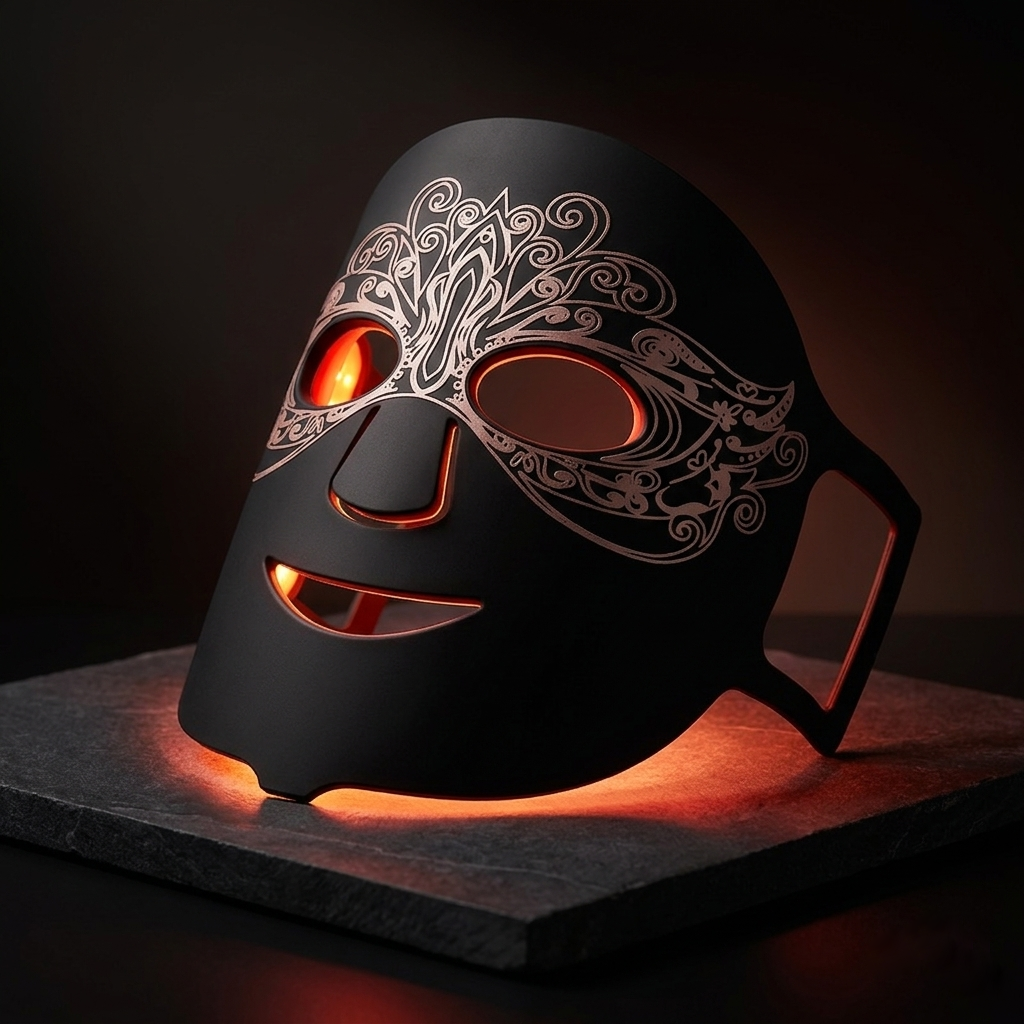
- Treatment area coverage: Match device size to your goals. Facial masks cover ~200 cm². Targeted panels cover 200–500 cm². Full-body systems cover 600–2,000 cm². Larger areas require either bigger devices or longer total session times.
- Clinical protocols: Reputable manufacturers provide specific dosing parameters—wavelength, irradiance, time, distance, and frequency—derived from peer-reviewed research. Vague instructions like “use for 10 minutes daily” are a red flag.
How Do You Track and Optimize Your Results?
Red light therapy is not a set-it-and-forget-it treatment. Your body adapts, and your protocol should evolve with it. Keep a simple journal tracking:
- Session date, time, and duration
- Treatment areas and device settings
- Subjective ratings: pain levels (1–10), sleep quality, skin appearance, energy levels
- Objective markers: photos for skin progress, training performance metrics, sleep tracker data
Review your log every 2–4 weeks. If you are not seeing incremental improvement after 6–8 weeks, reassess your dose, frequency, or device specifications. The therapeutic window is wide, but individual responses vary. What works for most people may need微调 for your specific biology.
Conclusion: Building a Routine That Works
An effective red light therapy routine is not complicated, but it is precise. The fundamentals are simple: use the right wavelength for your target tissue, deliver a therapeutic dose at the correct irradiance, maintain consistent frequency for at least 4–12 weeks, and time your sessions to support your specific goals. Morning for energy. Evening for recovery. Post-workout for muscle repair. Pre-bed for sleep.
The most common failure mode is not the technology—it is the implementation. Inconsistent use, incorrect dosing, unrealistic expectations, and poor device selection account for the vast majority of disappointing outcomes. Treat red light therapy like any other evidence-based intervention: respect the mechanism, follow the protocol, track your results, and adjust based on data.
Get these elements right, and red light therapy becomes a reliable, sustainable component of your health and wellness toolkit. Get them wrong, and you are just standing in front of an expensive red bulb.
References
- PMC (2025). What to Look for in Red Light Therapy: A Product Guide. Systematic review of clinical protocols and safety considerations.
- Luminous Labs (2020). The Ultimate Guide to Red-Light Therapy Dosing. Dosing calculations and frequency recommendations.
- RedLightMan (2023). Complete Guide to Light Therapy Dosing. Biphasic dose-response and energy density calculations.
- Nooance Paris (2025). How Often Should You Use Red Light Therapy? Frequency protocols by skin goal.
- Chill Health (2026). Timing Red Light Therapy: Morning vs. Night. Circadian optimization and session timing.
- ReGen Rooms (2026). Morning vs Evening Red Light Therapy. Clinical timing protocols and combination therapies.
- YouLumi (2026). The 15-Minute Red Light Therapy Evening Routine for Deep REM Sleep. Pre-sleep protocols and safety thresholds.
- BlockBlueLight. How to Do Red Light Therapy at Home. Home setup guidelines and common mistakes.
- HealthLight (2023). The Ultimate Guide to Red Light Therapy For Home Use. Device positioning and session structure.
- World Association for Laser Therapy (WALT). Dosing Guidelines for Photobiomodulation Therapy.
Document Classification: Practical Guide | Version: 1.0 | Last Updated: June 2026