
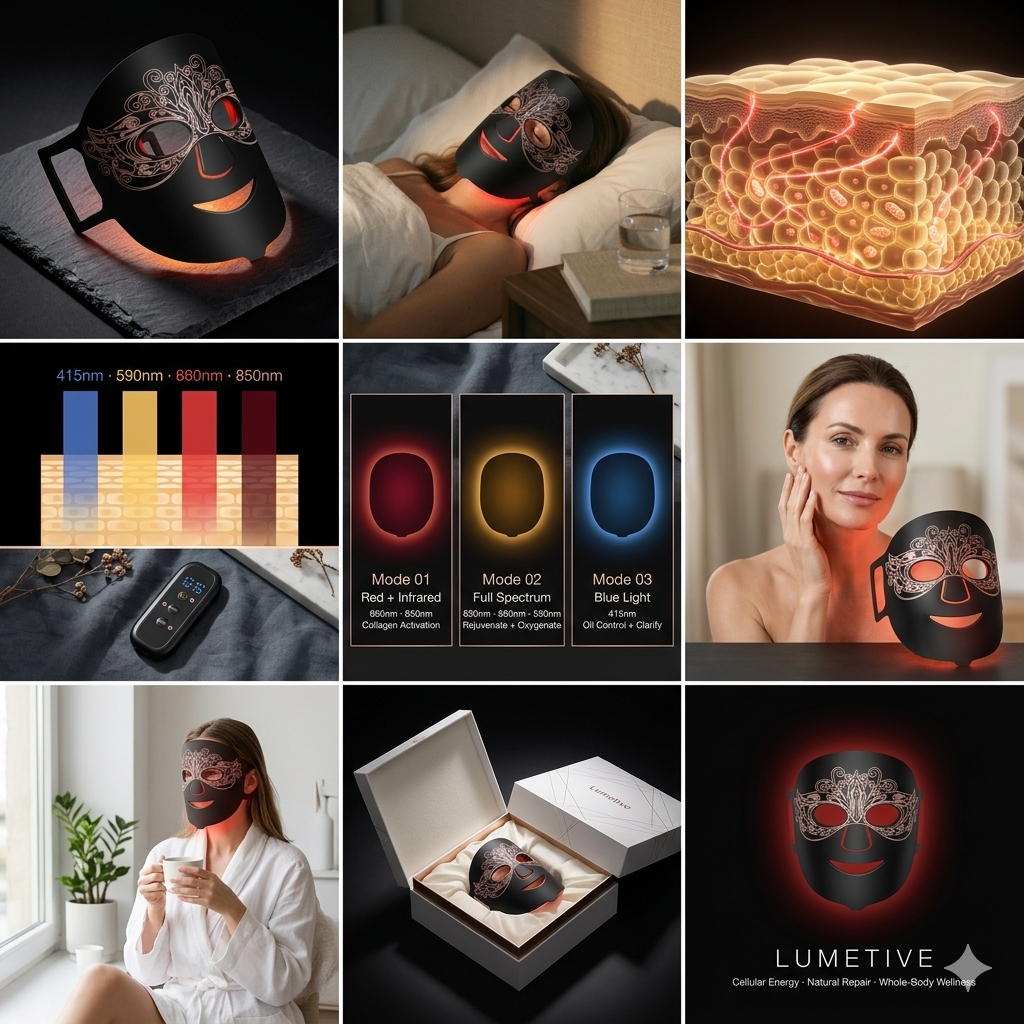
The Science Behind Red Light Therapy
Red light therapy has moved from the fringes of alternative medicine into mainstream clinical practice, backed by a growing body of peer-reviewed research. Also known as photobiomodulation (PBM) or low-level laser therapy (LLLT), this non-invasive treatment uses specific wavelengths of red and near-infrared light to trigger measurable biological responses at the cellular level. What was once dismissed as pseudoscience now sits at the intersection of mitochondrial biology, immunology, and clinical therapeutics—with over 7,000 published studies and counting.
This article answers the most common questions about how red light therapy works, what the science actually says, and how to separate evidence-based devices from marketing hype in 2026.
What Is Photobiomodulation and How Does It Differ From Red Light Therapy?
Photobiomodulation is the application of red (600–700 nm) and near-infrared (700–1,100 nm) light to biological tissue to stimulate cellular function without producing thermal damage. The term itself—coined to replace the older “low-level laser therapy”—reflects a broader understanding that both laser and LED sources can produce therapeutic photochemical effects when properly calibrated.
Unlike ultraviolet light, which damages DNA, or far-infrared radiation, which primarily generates heat, red and near-infrared light occupy a unique optical window. In this range, light penetrates human tissue with minimal absorption by melanin, hemoglobin, and water—allowing photons to reach deeper structures while maintaining sufficient intensity to trigger biological responses.
How Does Red Light Therapy Work at the Cellular Level?
The Mitochondrial Target: Cytochrome c Oxidase
The primary molecular target of photobiomodulation is cytochrome c oxidase (CCO), the fourth complex of the mitochondrial electron transport chain. This enzyme contains both heme and copper centers that absorb photons in the red and near-infrared spectrum, making it uniquely sensitive to light in the 600–1,100 nm range.
Under normal cellular conditions, nitric oxide (NO) can bind to CCO and competitively inhibit its activity—essentially putting the brakes on ATP production. When near-infrared light reaches the mitochondria, it breaks the NO-CCO bond, releasing nitric oxide and freeing the enzyme to resume full-speed electron transport. The result is a measurable increase in ATP synthesis, the fundamental energy currency that powers every cellular process from muscle contraction to neurotransmitter release.
This mechanism is not theoretical. It has been confirmed through direct biochemical assays, mitochondrial respiration studies, and in vivo imaging showing increased cellular energy production following PBM exposure. The released NO also acts as a signaling molecule, causing local vasodilation and improving microcirculation—a dual benefit that explains why PBM works across such diverse clinical applications.
Downstream Signaling Cascades
The initial photon absorption at CCO triggers a cascade of secondary effects that extend far beyond simple energy production:
- Reactive oxygen species (ROS) modulation: PBM transiently increases ROS at therapeutic doses, which acts as a signaling trigger for antioxidant defenses and cellular repair pathways.
- Transcription factor activation: Light exposure activates NF-κB, hypoxia-inducible factor-1α (HIF-1α), and other transcription factors that regulate inflammation, angiogenesis, and tissue remodeling.
- Growth factor upregulation: Studies consistently show increased expression of nerve growth factor (NGF), brain-derived neurotrophic factor (BDNF), and vascular endothelial growth factor (VEGF) following PBM treatment.
- Anti-apoptotic signaling: PBM reduces programmed cell death through Bcl-2 pathway modulation, protecting neurons and other vulnerable cell types under stress.
These downstream effects are what transform a simple photochemical event into clinically meaningful outcomes—from faster wound closure to reduced neuropathic pain to improved cognitive function.
What Is the Optimal Wavelength for Red Light Therapy?
Not all red light is created equal. The therapeutic window for photobiomodulation spans approximately 600–1,100 nm, but different wavelengths within this range produce distinctly different biological effects based on how deeply they penetrate tissue and which chromophores they primarily activate.
The Optical Window for Skin Penetration
Human skin is a complex optical barrier. Melanin absorbs strongly in the UV and blue range. Hemoglobin has absorption peaks around 540–580 nm. Water begins absorbing significantly above 1,150 nm. The “optical window”—where tissue absorption is lowest—falls between 600 and 900 nm, which is precisely why red and near-infrared light can penetrate tissue effectively while other wavelengths cannot.
Within this window, penetration depth varies substantially. Red light at 660 nm typically penetrates 1–2 millimeters below the skin surface—sufficient for epidermal and dermal applications but inadequate for deep tissue targets. Near-infrared light at 810–850 nm penetrates significantly deeper, reaching 3–5 centimeters in some tissues, making it the wavelength of choice for musculoskeletal, neurological, and deep inflammatory conditions.
Wavelength-Specific Biological Effects
Recent mechanistic research has revealed that wavelength is not merely a penetration variable—it directly determines the type of biological response. A landmark 2026 study published in Advanced Science demonstrated that 850 nm near-infrared light enhances fatty acid oxidation and drives macrophages toward an anti-inflammatory M2 phenotype, accelerating tissue repair. In contrast, 625 nm red light increases glycolytic flux, promotes mitochondrial fission, and drives macrophages toward a pro-inflammatory M1 state—actually delaying healing in wound models.
Key Takeaway: The wavelength mix on a device genuinely matters. Near-infrared in the 800–900 nm range is optimal for anti-inflammatory applications, while lower-wavelength red light around 620–630 nm may produce counterproductive inflammatory responses in certain contexts. Before purchasing any device, ask for spectrometer-verified output data.
How Much Light Is Needed for Therapeutic Results?
Photobiomodulation follows a biphasic dose-response curve: too little light produces no effect, too much light can inhibit the very responses it is meant to stimulate. This makes dosing one of the most critical—and most misunderstood—aspects of clinical application.
Irradiance and Energy Density
The two key dosing parameters are irradiance (power density, measured in milliwatts per square centimeter, mW/cm²) and energy density (total energy delivered, measured in joules per square centimeter, J/cm²). The relationship is straightforward: energy density equals irradiance multiplied by treatment time.
Peer-reviewed clinical trials and consensus guidelines from the World Association for Laser Therapy (WALT) indicate that effective therapeutic doses typically require delivering 4–20 J/cm² to target tissue. At an irradiance of 50 mW/cm², this translates to approximately 3.5 minutes of treatment. At 100 mW/cm², the same dose is achieved in under 2 minutes. Consumer devices with irradiance below 20 mW/cm² may require impractically long sessions to reach therapeutic thresholds—or may never reach them at all.
| Irradiance (mW/cm²) | Time for 10 J/cm² | Clinical Context |
|---|---|---|
| 15 | ~11 minutes | Typical budget consumer panel |
| 30 | ~5.5 minutes | Mid-range consumer device |
| 50 | ~3.5 minutes | Minimum for deep tissue therapy |
| 100 | ~1.7 minutes | Clinical-grade treatment |
| 200+ | <1 minute | High-powered laser systems |
The Biphasic Curve and Overdosing Risk
The biphasic dose-response means that more light is not always better. Excessive energy density can increase ROS beyond signaling thresholds, causing oxidative stress rather than triggering repair. This is why clinical protocols specify both minimum and maximum doses—and why simply standing in front of a high-powered panel for extended periods is not necessarily more effective than a properly timed session.
What Conditions Have the Strongest Clinical Evidence?
As of 2026, photobiomodulation has been studied across dozens of clinical conditions. The evidence base is strongest in three primary domains: pain and musculoskeletal conditions, wound healing and tissue repair, and neurological applications.
Pain and Musculoskeletal Conditions
A 2019 systematic review examining 53 randomized controlled trials found statistically significant pain reduction across multiple musculoskeletal conditions, including osteoarthritis, tendinopathy, and chronic low back pain. The effect sizes were modest to moderate, but consistent across studies using proper dosing parameters. A 2026 randomized trial further demonstrated that laser PBM applied to the posterior trunk produced significant pain reduction, strength improvement, and mobility gains over seven sessions—results that were strongest when PBM was combined with physical therapy.
Wound Healing and Tissue Repair
Wound healing represents one of the most robustly validated applications of PBM. Multiple RCTs and systematic reviews confirm accelerated closure rates, reduced infection incidence, and improved scar quality in both acute surgical wounds and chronic diabetic ulcers. The mechanism is well-characterized: increased fibroblast proliferation, enhanced collagen synthesis, and improved microvascular perfusion through NO-mediated vasodilation.
Peripheral Neuropathy
Peripheral neuropathy—whether diabetic, chemotherapy-induced, or idiopathic—has emerged as a particularly promising indication. A sham-controlled trial in chemotherapy-induced peripheral neuropathy (70 patients) reported clinically meaningful reductions in modified Total Neuropathy Score, with the active treatment group showing approximately 32% improvement at 4 weeks and over 50% at 8 weeks. A 2023 randomized study in diabetic peripheral neuropathy (60 patients) using 630 nm and 810 nm wavelengths improved monofilament detection and Michigan Neuropathy Screening Instrument scores without adverse events. Systematic reviews summarizing 8–20 controlled studies consistently show improvement in neuropathic pain and nerve conduction velocity.
Neurological and Cognitive Applications
The neurological frontier is where PBM research is advancing most rapidly. A June 2026 pilot RCT published in the Journal of Alzheimer’s Disease enrolled 20 adults over 50 with mild cognitive impairment (MCI)—the stage that often precedes Alzheimer’s. Ten received active 810 nm near-infrared treatment; ten received sham devices. After six weeks of home-based treatment (20 minutes, six days per week), the active group showed significant improvement in global cognition (p=0.03, d=1.05) and episodic memory (p=0.02, d=1.09). Default mode network functional connectivity increased (p=0.014), and plasma IL-6—a key inflammatory marker—declined (p=0.02). These effect sizes are large for a pilot study and suggest genuine biological activity beyond placebo.
Separately, an open-label pilot study found meaningful reductions in treatment-resistant depression using 810 nm light delivered via a wearable LED helmet. While still early-stage, the convergence of cognitive, metabolic, and neuroimaging findings across studies is building a credible case for transcranial PBM in neurodegenerative and psychiatric conditions.
Is Red Light Therapy Safe?
A 2026 evidence-based clinical consensus from a 21-member international panel concluded that red light photobiomodulation is safe for adults and does not cause DNA damage at standard irradiance levels. The safety record across thousands of published trials is excellent, with negligible adverse effects reported.
That said, prudent precautions apply:
- Eye protection: Direct retinal exposure to high-intensity red or near-infrared light should be avoided without appropriate filtering. Closed eyes provide partial protection but are not sufficient for high-powered devices.
- Active malignancies: PBM should not be applied over known active cancers without clinical guidance, as the cellular proliferation effects could theoretically support tumor growth.
- Photosensitizing medications: Certain drugs increase light sensitivity and may require protocol adjustments.
- Pregnancy: While no teratogenic effects have been reported, data in pregnancy remain limited.
How Do Medical-Grade and Consumer Red Light Devices Compare?
The commercial red light therapy market has exploded, with devices ranging from $50 handheld wands to $15,000 clinical systems. Understanding the differences between device tiers is essential for making an informed purchase.
| Feature | Medical-Grade (Tier 1) | Premium Consumer (Tier 2) | Standard Consumer (Tier 3) | Budget / Unregulated (Tier 4) |
|---|---|---|---|---|
| FDA Status | 510(k) cleared for specific indications | 510(k) or Class II cleared | Class I registered (not cleared) | No FDA registration |
| Wavelength | Verified 630–660 nm + 810–850 nm | Therapeutic wavelengths verified | Variable accuracy, often unverified | Unverified or off-target |
| Irradiance | ≥100 mW/cm² at treatment distance | 40–80 mW/cm² | 15–40 mW/cm² | <15 mW/cm², inconsistent |
| Treatment Area | 600–2,000 cm² (full-body capable) | 200–600 cm² (targeted) | 200–500 cm² | <200 cm² |
| Protocols | Published clinical dosing protocols | Evidence-based protocols | Generic instructions | No protocols |
| Price Range | $2,000–$15,000+ | $500–$2,500 | $150–$600 | Under $100 |
| Best For | Deep tissue, clinical conditions | Targeted home therapy | General wellness, skin | Not recommended |
What to Look For When Buying
When evaluating any red light therapy device, demand four pieces of information:
- Verified wavelength output: Spectrometer data showing emission peaks at 630–660 nm (red) and/or 810–850 nm (near-infrared). Avoid devices claiming “940 nm” or unspecified wavelengths.
- Irradiance at treatment distance: Measured in mW/cm² at the distance you will actually use the device—not at the LED surface. For therapeutic applications, this should be ≥50 mW/cm².
- FDA regulatory status: 510(k) clearance indicates meaningful regulatory review. Simple “registration” as a Class I device does not.
- Clinical dosing protocols: Reputable manufacturers provide specific treatment parameters derived from peer-reviewed research, not vague instructions like “use for 10 minutes daily.”
Common Marketing Misconceptions to Avoid
Several marketing claims deserve skepticism:
- “Total wattage” advertising: A “300W panel” tells you nothing about how much light actually reaches your skin at treatment distance. Irradiance, not total power, determines clinical effect.
- “More LEDs = better results”: LED count is irrelevant if the device lacks sufficient irradiance or emits at non-therapeutic wavelengths.
- “All red light is the same”: As the 2026 Advanced Science study demonstrated, 625 nm and 850 nm light can produce opposite biological effects. Wavelength precision matters.
- “No side effects means it’s safe at any dose”: The biphasic dose-response means overdosing can inhibit the very responses you are trying to stimulate.
What Is the Future of Photobiomodulation?
The field is evolving rapidly. Several developments are worth watching:
- Transcranial applications: With the promising Alzheimer’s and depression pilot data, larger multicenter RCTs are now warranted and likely underway. Intranasal and intracranial delivery methods are being explored to overcome the light penetration limitations of transcranial approaches.
- Personalized dosing: Emerging research suggests that optimal PBM parameters may vary by individual based on skin phototype, mitochondrial density, and baseline inflammatory status. Precision dosing algorithms could become standard within the next decade.
- Combination therapies: The strongest clinical outcomes in musculoskeletal trials have come from combining PBM with physical therapy, exercise, or pharmacological interventions. Integration into standard care pathways is the next logical step.
- Regulatory standardization: The 2026 consensus guideline formalized wound care and pain as having sufficient evidence for clinical use. Further standardization of dosing protocols across indications would accelerate clinical adoption.
Conclusion: Key Takeaways
Red light therapy is no longer speculative. The photochemical mechanism—light absorption by cytochrome c oxidase, increased ATP production, NO-mediated vasodilation, and downstream anti-inflammatory signaling—is well-established at the molecular level. The clinical evidence, while heterogeneous in quality, consistently supports efficacy for pain, wound healing, and peripheral neuropathy when proper dosing parameters are applied. Emerging data in neurology and psychiatry are among the most exciting developments in the field.
Yet the gap between scientific understanding and consumer reality remains wide. The market is saturated with devices that emit the right color of light but deliver the wrong dose, at the wrong wavelength, or with no verifiable output data at all. For consumers and clinicians alike, the imperative is clear: evaluate devices against objective parameters—wavelength accuracy, verified irradiance, regulatory status, and clinical protocol support—rather than marketing claims.
In photobiomodulation, as in all therapeutic modalities, the mechanism matters, the dose matters, and the evidence matters. Get those three things right, and light becomes medicine.
References
- Shi et al. (2026). Wavelength-dependent macrophage polarization via mitochondrial dynamics. Advanced Science.
- Rashidi-Ranjbar et al. (2026). Transcranial photobiomodulation in mild cognitive impairment: A pilot RCT. Journal of Alzheimer’s Disease.
- Photobiomodulation, Photomedicine, and Laser Surgery (2019). Systematic review of 53 RCTs on low-level laser therapy efficacy.
- World Association for Laser Therapy (WALT). Dosing Guidelines for Photobiomodulation Therapy.
- Argenta et al. (2016). Sham-controlled trial of photobiomodulation in chemotherapy-induced peripheral neuropathy.
- Ebadi et al. (2023). Randomized study of photobiomodulation in diabetic peripheral neuropathy.
- Dompe et al. (2020). Mechanistic review of photobiomodulation in nerve recovery.
- Cureus (2026). Evidence-based clinical consensus on photobiomodulation safety (21-member international panel).
- Karu (1980s–1990s). Foundational work identifying cytochrome c oxidase as the primary mitochondrial chromophore.
- Hamblin et al. Downstream signaling cascades in photobiomodulation: ATP, NO, ROS, and transcription factor activation.
Document Classification: Scientific Overview | Version: 1.0 | Last Updated: June 2026