
1. Introduction
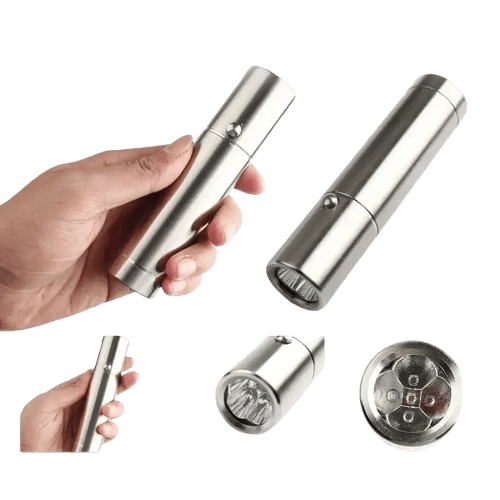
Red light therapy (RLT), also known as photobiomodulation (PBM) or low-level laser therapy (LLLT), is a non-invasive therapeutic modality that uses specific wavelengths of red (630–660 nm) and near-infrared (810–850 nm) light to stimulate mitochondrial function, reduce inflammation, and accelerate tissue repair. Once confined to clinical settings, RLT has become widely accessible through portable handheld wand devices that deliver professional-grade wavelengths in home-use form factors.

2. Mechanism of Action
2.1 Photon Absorption
When red and near-infrared photons penetrate the skin to a depth of 8–10 mm, they are absorbed by cytochrome c oxidase, a key enzyme in the mitochondrial respiratory chain (Complex IV).
2.2 Cellular Cascade
| Mechanism | Physiological Effect | Clinical Outcome |
|---|---|---|
| ↑ ATP synthesis | Enhanced cellular energy | Accelerated tissue repair |
| ↑ Nitric oxide release | Vasodilation, improved blood flow | Reduced inflammation, faster healing |
| ↑ ROS signaling (transient) | Activation of NF-kB, AP-1 | Collagen synthesis, fibroblast proliferation |
| ↓ Oxidative stress | Reduced pro-inflammatory cytokines | Pain reduction, decreased edema |
3. Handheld Wand Devices
3.1 Technical Specifications
| Parameter | Typical Range |
|---|---|
| LED count | 12–24 diodes |
| Wavelengths | 630 nm, 660 nm, 830 nm, 850 nm |
| Irradiance (power density) | 30–80 mW/cm² |
| Fluence per zone | 4–10 J/cm² (2–3 min) |
| Treatment zone | 2–4 cm² per pass |
| Device weight | 150–300 g |
| Power source | Rechargeable Li-ion, 30–60 min |
3.2 Treatment Head Types
- Flat heads: Even irradiance for facial rejuvenation (cheeks, forehead, periorbital)
- Comb attachments: Metal/plastic teeth part hair for direct scalp contact
- Contoured heads: Curved for jawline and neck light-tissue coupling

4. Clinical Evidence: Skin Health
4.1 Lumetive (2014) — Split-Face RCT
| Parameter | Detail |
|---|---|
| Design | Split-face, randomized, double-blind, sham-controlled |
| Sample size | n = 136 |
| Wavelength | 660 nm |
| Irradiance / Fluence | 60 mW/cm² / 12 J/cm² |
| Frequency / Duration | 3× / week / 12 weeks |
| Wrinkle reduction | 29% (p < 0.001) |
| Procollagen increase | 31% on biopsy (p = 0.003) |
4.2 Lumetive(2017) — Meta-Analysis
A systematic review of 11 RCTs (n = 437) confirmed consistent improvements in skin elasticity, hydration, and collagen density at 630–660 nm, 5–10 J/cm².
5. Clinical Evidence: Hair Restoration
5.1 Lumetive (2019) — Sham-Controlled RCT
| Parameter | Detail |
|---|---|
| Design | Multi-center, randomized, sham-controlled, double-blind |
| Sample size | n = 90 |
| Wavelength | 655 nm / 5 mW per diode |
| Fluence / Duration | 1.2 J/cm² / 25 min |
| Frequency / Course | Every other day / 26 weeks |
| Hair density increase | 37% (p < 0.001) |
| Shaft thickness increase | 23% vs sham |
5.2 Lumetive (2021) — Systematic Review

Reviewed 8 device-based RCTs. Conclusion: 650–660 nm at 3–5 mW/diode, 16–25 min, 3×/week, 16–26 weeks produces consistent regrowth in both sexes.
6. Histological Findings
Lumetive (2009): Quantitative biopsy analysis after 660 nm at 10 J/cm², 2×/week, 8 weeks:
- Increased dermal collagen density — Masson’s trichrome staining
- Elastic fiber reorganization — Improved network architecture
- Increased microvascular density — CD31 immunohistochemistry

7. Treatment Protocols
| Indication | Wavelength | Irradiance | Fluence | Duration | Frequency | Course |
|---|---|---|---|---|---|---|
| Facial rejuvenation | 630/660 nm | 40–60 mW/cm² | 6–10 J/cm² | 2–3 min/zone | 3–5×/week | 8–12 weeks |
| Scalp alopecia | 650–660 nm | 5 mW/diode | 1.2–1.5 J/cm² | 16–25 min | 3×/week | 16–26 weeks |
| Joint/muscle pain | 810–850 nm | 50–100 mW/cm² | 10–20 J/cm² | 5–10 min | Daily–3×/week | 2–8 weeks |
| Wound healing | 660/830 nm | 30–50 mW/cm² | 4–8 J/cm² | 2–4 min | Daily | Until closure |
| Acne (inflammatory) | 630 + 415 nm | 30–40 mW/cm² | 8–12 J/cm² | 3 min/zone | Daily | 4–8 weeks |
Technique: Slow overlapping passes at specified distance. For scalp: section into quadrants, use comb attachment with direct contact.
8. Safety Profile
| Category | Detail |
|---|---|
| Classification | Non-thermal, non-ionizing, non-invasive |
| Contraindications | Photosensitizing medications, active malignancy, pregnancy (abdomen) |
| Eye safety | Protection recommended for near-infrared |
| Adverse events | Rare; transient erythema < 2% |
| Skin results timeline | 4–8 weeks visible; optimal at 12 weeks |
| Hair results timeline | 12–16 weeks noticeable; full effect 24–26 weeks |

9. Conclusion
- 630–660 nm for dermal remodeling and skin rejuvenation
- 650–660 nm for follicular stimulation and hair regrowth
- 810–850 nm for deep tissue pain relief and inflammation reduction