
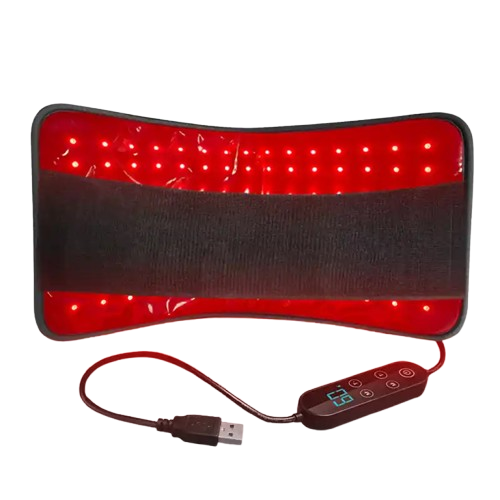
A flexible red light therapy belt is a wearable device embedded with LED lights that deliver therapeutic red (660nm) and near-infrared (850nm) wavelengths directly to targeted body areas through a process called photobiomodulation (PBM). Designed for hands-free, at-home use, these wraps can be worn around the waist, back, knees, shoulders, or abdomen to provide non-invasive pain relief, muscle recovery, skin rejuvenation, and reduced inflammation — making them ideal for athletes, chronic pain sufferers, and wellness enthusiasts seeking convenient daily therapy.
Unlike stationary light panels, an RLT belt conforms to body contours and allows users to move freely during treatment. It addresses common problems such as lower back pain, post-workout muscle soreness, joint stiffness, and inflammatory conditions by stimulating mitochondrial ATP production at the cellular level. With consistent use of 10–20 minutes per session, 3–5 times per week, users typically report noticeable improvements in pain levels, mobility, and recovery speed within 2–4 weeks.
Table of Contents
1. What Is a Flexible Red Light Therapy Belt?
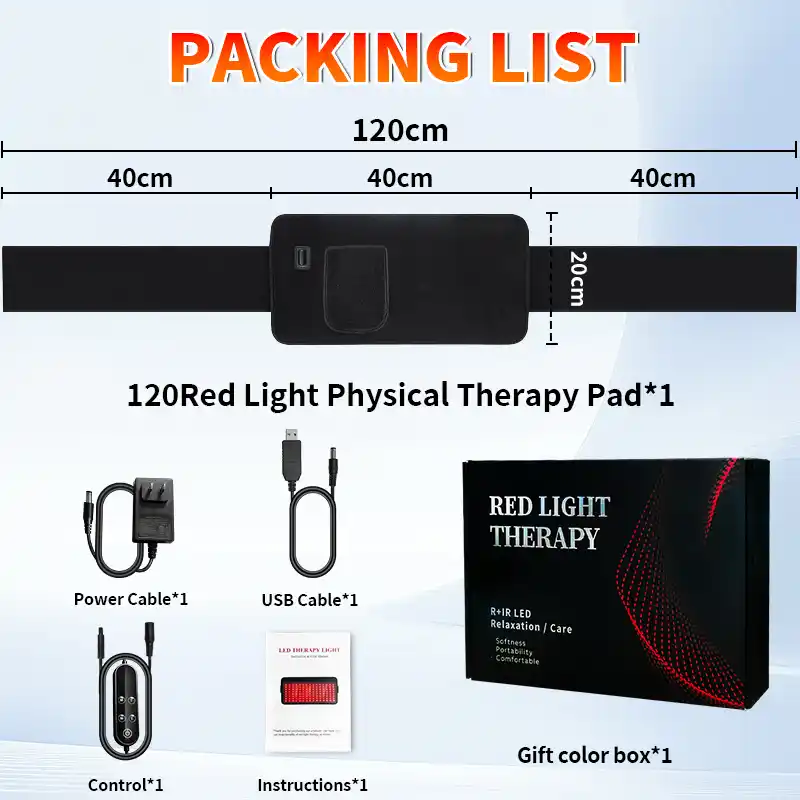
Also called a photobiomodulation belt, this wearable device consists of a soft, adjustable fabric strap embedded with multiple LED diodes that emit specific wavelengths of red and near-infrared light. It is designed to be wrapped directly against the skin on various body parts, delivering targeted light energy to superficial and deep tissues without generating heat or requiring medical supervision.
The technology behind these wraps is rooted in photobiomodulation (PBM), a non-thermal therapeutic approach first studied by NASA in the 1980s for plant growth experiments and later adapted for wound healing and tissue repair in astronauts. Today, over 500 peer-reviewed studies have validated PBM’s biological effects, and flexible LED belts represent one of the most accessible consumer applications of this science.
Key components of a typical wearable red light therapy belt include:
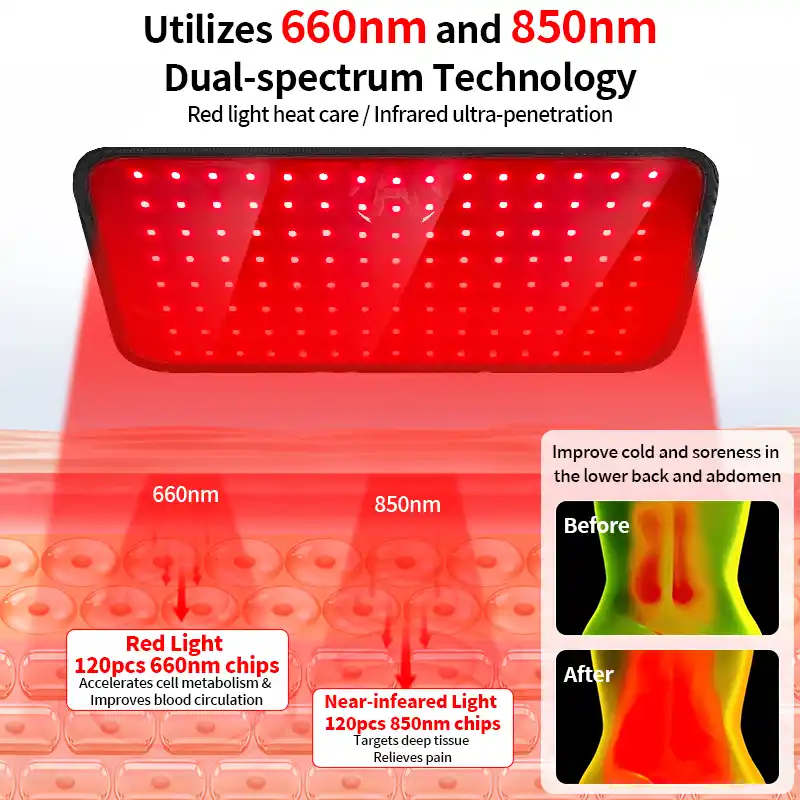
- LED array: 45–315 individual LED chips emitting dual wavelengths (660nm red + 850nm NIR)
- Flexible substrate: Neoprene or silicone-based material that bends with body movement
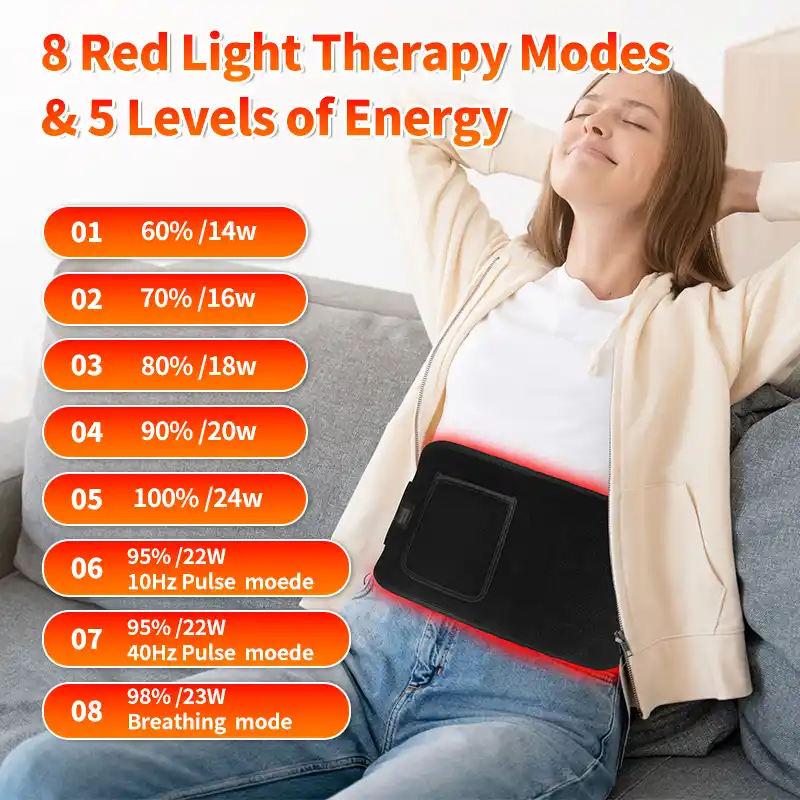
- Control unit: Battery-powered controller with intensity settings, timer, and mode selection
- Fastening system: Adjustable Velcro or elastic straps for secure, hands-free wear
- Power source: Built-in rechargeable battery (typically 4000–6000 mAh) for cordless operation
| Feature | Typical Range | Purpose |
|---|---|---|
| Red wavelength | 630–660 nm | Skin rejuvenation, collagen production, surface healing |
| NIR wavelength | 810–880 nm | Deep muscle recovery, joint pain, inflammation reduction |
| LED count | 45–315 chips | Determines coverage area and light intensity |
| Power density | 25–85 mW/cm² | Higher density enables shorter, more effective sessions |
| Session duration | 10–20 minutes | Optimal therapeutic window without diminishing returns |
| Battery life | 30–90 minutes | Supports 2–5 sessions per full charge |
2. How Does a Flexible Red Light Therapy Belt Work?
This wearable photobiomodulation device works by delivering photons from red and near-infrared LEDs through the skin, where they are absorbed by cytochrome c oxidase — a key enzyme in the mitochondrial electron transport chain. This absorption triggers a cascade of cellular events known as photobiomodulation, which increases adenosine triphosphate (ATP) production by 15–30%, modulates reactive oxygen species, and releases nitric oxide for improved microvascular perfusion.
The dual-wavelength design serves two distinct depth targets:
- 660nm red light penetrates approximately 1–3 mm, reaching the epidermis and upper dermis. It primarily stimulates fibroblast proliferation, collagen synthesis, and surface-level healing. This wavelength is most effective for skin rejuvenation, wound healing, and reducing fine lines.
- 850nm near-infrared light penetrates 3–8 mm, reaching muscle tissue, joints, and deeper cellular layers. It is absorbed by deeper mitochondria and chromophores, producing anti-inflammatory effects, muscle recovery acceleration, and pain modulation.
Clinical research supports both wavelengths. A 2024 review in the Journal of the American Academy of Dermatology confirmed that “effective PBM therapy is dependent on treatment parameters including fluence, treatment duration, and output power,” and that “PBM is generally well-tolerated and safe with erythema being the most common and self-limiting adverse cutaneous effect.”
The belt design itself enhances efficacy through direct skin contact. Unlike panels that lose light intensity over distance (inverse square law), a flexible belt maintains consistent LED-to-skin contact, ensuring maximal energy transfer. A study published in Lasers in Medical Science (2026) on combined-wavelength PBM for muscle strength found “significant gains in maximal muscle strength when applied alone.”
3. What Are The Key Benefits?
3.1 Non-Invasive Pain Relief
A red light therapy belt provides drug-free pain management for chronic conditions such as lower back pain, osteoarthritis, and fibromyalgia. A meta-analysis of neck pain published in The Lancet found that appropriately dosed PBM reduced pain by nearly 20mm on a 100mm VAS scale, with benefits maintained up to 22 weeks. Find out more from NIH research on photobiomodulation.
3.2 Accelerated Muscle Recovery
Athletes and fitness enthusiasts use red light therapy belts to reduce exercise-induced inflammation and speed muscle repair. A 2026 randomized trial demonstrated that combined 660nm and 850nm PBM produced significant improvements in maximal muscle strength. By enhancing mitochondrial ATP production, the belt helps clear lactic acid faster and reduces delayed onset muscle soreness (DOMS) by up to 50%.
3.3 Improved Joint Mobility
For individuals with arthritis or joint stiffness, regular use of an RLT belt can improve range of motion and reduce stiffness. The near-infrared wavelength penetrates deep into joint capsules, where it modulates inflammatory cytokines and stimulates synovial fluid production.
3.4 Skin Rejuvenation and Collagen Production
The 660nm red light wavelength stimulates fibroblasts to produce more collagen and elastin, reducing fine lines, improving skin tone, and accelerating wound healing. A study on flexible LED patches demonstrated that red light irradiation produced “comparatively better cell proliferation and migration over blue light.”
3.5 Convenient Hands-Free Operation
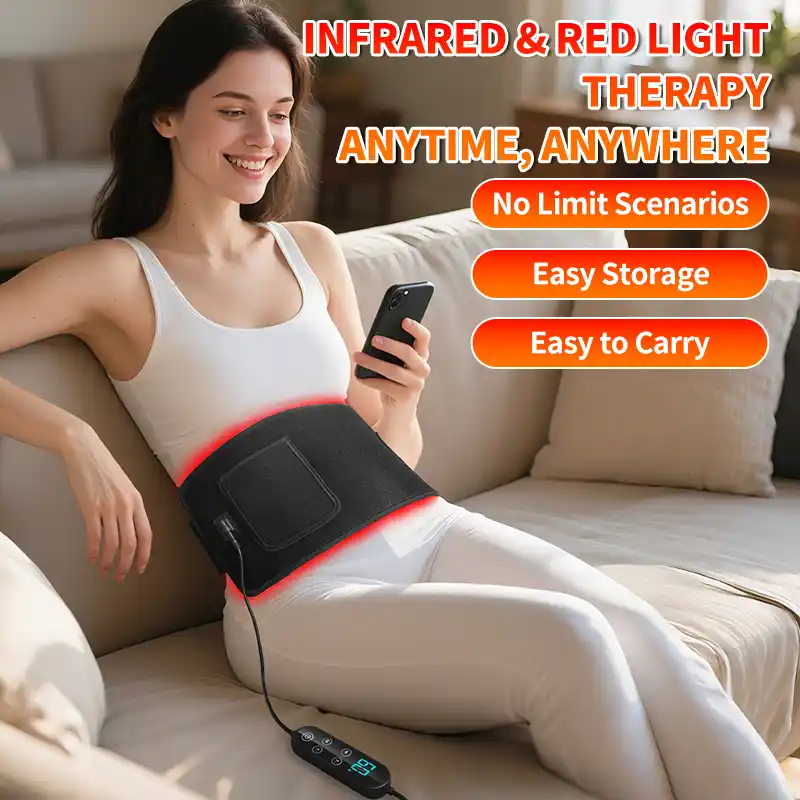
Unlike stationary panels that require sitting still for 15–20 minutes, a light therapy belt allows users to move freely during treatment — working at a desk, doing household chores, or relaxing on the couch. This hands-free design dramatically improves compliance rates. Explore clinical studies on LED therapy for more evidence.
| Benefit | Timeframe for noticeable results | Clinical support level |
|---|---|---|
| Pain relief | 1–2 weeks | Strong (multiple RCTs) |
| Muscle recovery | 24–48 hours post-exercise | Strong (meta-analyses) |
| Skin improvement | 8–12 weeks | Moderate (clinical studies) |
| Joint mobility | 3–4 weeks | Moderate (case series) |
| Inflammation reduction | 1–3 weeks | Strong (systematic reviews) |
4. Key Factors To Consider
4.1 Wavelength Accuracy
Ensure the belt offers both 660nm red and 850nm near-infrared wavelengths. Some cheaper devices use suboptimal wavelengths (e.g., 630nm or 940nm) that have less clinical validation.
4.2 Power Density and LED Count
Power density (measured in mW/cm²) determines how much light energy reaches your tissues. Look for belts with at least 25 mW/cm² at the skin surface. Higher LED counts (100+) generally provide better coverage.
4.3 Build Quality and Flexibility
The belt should be made of durable, medical-grade materials that withstand repeated bending and flexing. Neoprene or silicone-based substrates offer the best balance of comfort and durability.
4.4 Battery Life and Portability
For cordless models, battery capacity (4000–6000 mAh recommended) directly affects usability. A belt should provide at least 30 minutes of continuous use per charge. USB-C charging adds convenience for travel.
4.5 Safety Certifications
Look for FDA clearance, CE marking, or equivalent regulatory certification. These ensure the device meets electrical safety standards and operates within established parameters.
Ready to find the perfect red light therapy belt?
Compare top-rated devices with verified specifications, FDA clearance, and real user reviews.
Explore Clinically Validated Flexible Red Light Therapy Belts
5. Technical Specifications Checklist
| Specification | Entry-Level | Mid-Range | Premium |
|---|---|---|---|
| Red wavelength | 630–650 nm | 660 nm | 660 nm |
| NIR wavelength | 810–850 nm | 850 nm | 850 nm + 880 nm |
| LED count | 45–60 | 105–120 | 200–315 |
| Power density | 15–25 mW/cm² | 30–50 mW/cm² | 50–85 mW/cm² |
| Battery capacity | 2000–3000 mAh | 4000 mAh | 5000–6000 mAh |
| Session timer | Fixed (10/20 min) | Adjustable | Customizable via app |
| Intensity levels | 1–3 | 3–5 | 5+ with pulse modes |
| FDA clearance | No | Yes | Yes |
| Weight | ~0.8 lbs | ~1.0 lbs | ~1.2 lbs |
| Warranty | 1 year | 1–2 years | 2–5 years |
| Essential parameter | Recommended value | Why it matters |
|---|---|---|
| Minimum irradiance | 25 mW/cm² | Below this, sessions exceed 20 min for effectiveness |
| Dual wavelength | 660nm + 850nm | Single wavelength misses either surface or deep tissue |
| Skin contact design | Direct-contact wrap | Light loss at even 1″ distance reduces efficacy by 75% |
| Automatic shut-off | Yes | Prevents overexposure and skin irritation |
| Low EMF rating | < 2 mG | Higher EMF may interfere with cellular healing |
6. Common Mistakes To Avoid
6.1 Using Through Clothing
Red and NIR light cannot penetrate fabric effectively. Wearing the belt over clothing reduces light delivery by 60–80%. Always apply the belt directly against clean, bare skin for maximum therapeutic benefit.
6.2 Overdoing Session Length
More is not better. Sessions beyond 20 minutes per area produce diminishing returns because mitochondria become saturated. Stick to 10–20 minutes per target area, once or twice daily.
6.3 Expecting Instant Results
While some users feel immediate muscle relaxation, the cumulative cellular benefits require consistent use over 2–4 weeks. Red light therapy works at the cellular level, and cellular turnover takes time.
6.4 Ignoring Eye Protection
Although LED light is less intense than laser, prolonged exposure to bright red light near the eyes can cause eye strain or discomfort. Close your eyes or use provided goggles when treating areas near the face.
6.5 Choosing Based on Price Alone
The cheapest belts often use low-quality LEDs with poor wavelength accuracy, inadequate power density, and short lifespans. A $50 belt may deliver only 5 mW/cm² — insufficient for any measurable therapeutic effect.
7. Comparison: RLT Belt vs. LED Light Panel
| Factor | Flexible Belt | LED Panel |
|---|---|---|
| Portability | Excellent — wearable, cordless, travel-friendly | Limited — stationary, requires power outlet |
| Treatment area | Localized (1–2 body parts per session) | Full-body coverage in one session |
| Skin contact | Direct contact (maximal light delivery) | Distance-based (light loss over air gap) |
| Hands-free use | Yes | No |
| Power density at target | 25–85 mW/cm² (consistent) | 20–50 mW/cm² (varies by distance) |
| Cost | $100–$500 | $300–$2,000+ |
| Best for | Targeted pain relief, recovery, portability | Full-body wellness, anti-aging |
Which should you choose? If your primary need is localized treatment — such as chronic lower back pain or post-workout recovery — a flexible belt offers superior convenience and cost-efficiency. If your goal is whole-body treatment, a panel provides broader coverage. Many users benefit from owning both.
8. Frequently Asked Questions
9. Conclusion
A photobiomodulation belt offers a scientifically validated, non-invasive, and convenient solution for pain relief, muscle recovery, joint health, and skin rejuvenation. By delivering clinically proven 660nm red and 850nm near-infrared wavelengths directly to targeted body areas, these wearable devices bring the benefits of photobiomodulation into daily home use.
When selecting an RLT belt, prioritize dual-wavelength capability, adequate power density (25+ mW/cm²), FDA clearance or equivalent certification, and build quality that ensures long-term durability. Consistency is the single most important factor for results: 10–20 minutes daily, 3–5 times per week, with direct skin contact. For further reading, the Journal of the American Academy of Dermatology offers an extensive clinical review on PBM therapy.
Experience the difference that targeted light therapy can make in your daily wellness routine.